


Hot afternoons. Dusty winds. Long stretches of dry soil appear almost impossible to transform into lush lawns. Yet across Alice Springs, small pockets of lush grass appear behind homes, cafés, resorts, and office buildings. Those lawns don’t survive by luck.
In a place where water is precious, and summers can roast the ground, irrigation becomes less about convenience and more about survival for any lawn. A poorly planned system wastes water, burns the grass, and increases utility bills significantly. A well-planned system quietly delivers water exactly where it’s needed.
This guide explores how lawn irrigation design works in Alice Springs, why climate matters so much, and how modern irrigation layouts help lawns thrive in one of the harshest gardening environments in Australia.
Understanding the Harsh Water Reality of Alice Springs Landscapes
Landscapes in Alice Springs operate under a simple rule: water disappears faster than expected. Evaporation rates here regularly outrun what many homeowners assume lawns require. Installers who treat irrigation the same way they would in coastal cities quickly discover that systems need to operate differently in desert climates.
Local soil types only make things more complicated. You’ll find sandy patches across many backyards that drain water away before the grass can even drink. Then, just a few meters over, clay pockets might trap water far longer than you’d want. Any solid lawn irrigation design has to account for these massive shifts in the ground.
Ignoring those soil contrasts usually leads to uneven turf performance. One area grows thick and healthy, while another fades under the sun. Many irrigation corrections done later in the life of a lawn trace back to an early design stage where soil behavior was not properly considered.
Early Planning Mistakes That Create Long-Term Irrigation Problems
Some irrigation problems do not show up immediately. They surface slowly as lawns mature. A common mistake during installation is placing sprinkler heads based purely on visual coverage rather than calculating water pressure and spacing requirements.
Without careful lawn irrigation design, the sprinklers closest to the water source perform strongly, while the last heads along the pipe receive weaker pressure. Over time, the lawn reveals this imbalance through faded outer sections and overly wet central areas.
Budget limitations also influence these outcomes. Homeowners sometimes request simplified irrigation layouts to reduce upfront cost. However, systems with fewer watering zones often struggle to match the needs of different lawn areas. A thoughtful lawn irrigation design would normally separate sunny and shaded sections to maintain healthier turf.
Climate Factors That Influence Lawn Irrigation Design in Alice Springs
Alice Springs landscapes experience some of the most demanding irrigation conditions in Australia. Long summers, strong sunlight, and dry winds place enormous stress on grass surfaces.
A well-planned lawn irrigation design often relies on shorter watering cycles rather than long watering sessions. Water applied slowly allows soil to absorb moisture instead of letting it run across the surface or evaporate quickly.
Wind is another factor that messes with how irrigation systems actually perform. Standard heads often lose their aim when a breeze catches the spray. During the install, we usually have to tweak the sprinkler types or angles to make sure the lawn irrigation design still hits every spot evenly.
Lawn Irrigation Maintenance and System Care
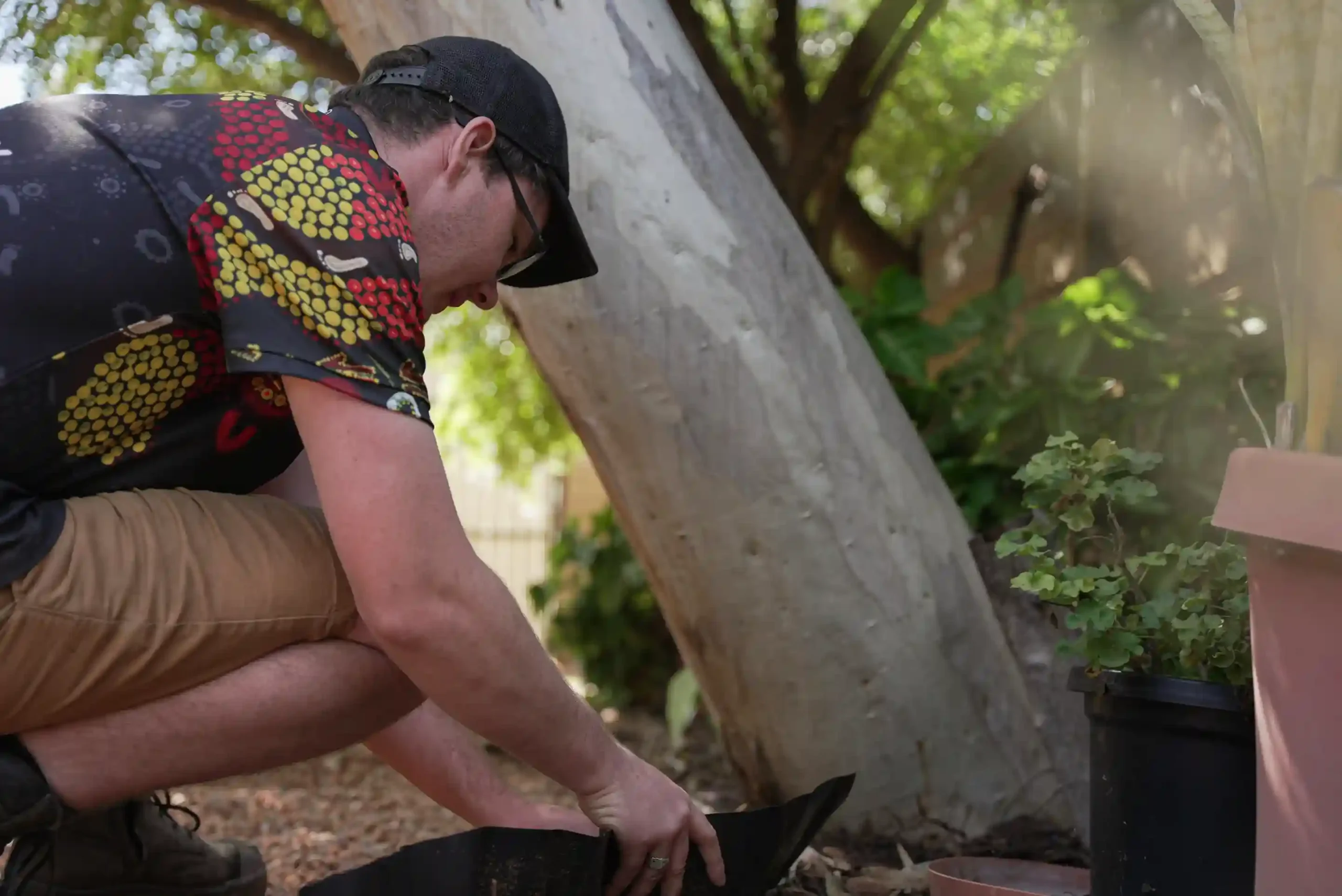
Even the most advanced lawn irrigation design requires regular maintenance.
Small problems quickly lead to major inefficiencies.
Common maintenance checks include:
- Inspecting sprinkler heads for blockages
- Checking water pressure levels
- Adjusting spray patterns
- Cleaning irrigation filters
- Monitoring controller settings
Routine inspection ensures the irrigation system continues operating efficiently throughout the year.
Pressure Management and Pipe Layout Decisions That Matter
Water pressure determines how evenly irrigation systems perform and is a critical factor for efficient outdoor water use and irrigation. Too much pressure creates mist that evaporates before reaching the lawn, while too little pressure prevents sprinklers from reaching their intended coverage area.
Pipe diameter plays a critical role in maintaining consistent pressure throughout an irrigation system. A carefully planned lawn irrigation design usually balances pipe size with the number of sprinkler heads operating within each zone.
During several residential installations around Alice Springs suburbs, pressure loss became obvious once systems ran simultaneously. Adjustments to the lawn irrigation design were required to ensure each sprinkler delivered the same water distribution.
Estimated Irrigation Water Use for Lawn Areas
The following chart shows general irrigation needs for lawns in warm climates similar to Alice Springs.
| Grass Type | Water Requirement (per week) | Sun Tolerance | Irrigation Notes |
| Buffalo Grass | 25–35 mm | Medium | Water deeply but less frequently |
| Couch Grass | 30–40 mm | High | Requires consistent watering during summer |
| Kikuyu Grass | 35–45 mm | Very High | Fast growing, needs frequent irrigation |
| Zoysia Grass | 20–30 mm | Medium | Slow growing, requires less water |
| Bermuda Grass | 30–40 mm | High | Performs well in hot climates like Alice Springs |
Actual usage varies based on soil conditions, grass type, and weather patterns.
Sprinkler Placement Strategies That Avoid Patchy Turf
Sprinkler placement often looks simple on paper. In reality, small layout adjustments can make significant differences in watering efficiency.
Many irrigation plans follow a strict grid pattern. However, lawns rarely fit perfect rectangles. A practical lawn irrigation design adapts sprinkler spacing to the actual shape of the lawn rather than forcing symmetry.
Head-to-head coverage remains a widely used rule in lawn irrigation design, meaning one sprinkler should reach the next. Ignoring this principle results in gaps where the grass receives less water and gradually weakens.
Budget Constraints and Their Hidden Influence on Irrigation Systems
Budget discussions appear in nearly every landscaping project. Irrigation systems often become the area where compromises happen first.
It’s common for homeowners to stick with manual watering to avoid the cost of new tech. While manual watering may save money initially, it lacks the reliable performance of a professional lawn irrigation design. Without it, you usually end up with dry patches or soaked spots that eventually stress the grass.
Reducing irrigation zones also saves money initially. Yet lawns receiving different sunlight conditions may require unique watering schedules. A well-planned lawn irrigation design usually separates these zones to maintain balanced moisture levels across the turf.
Maintenance Oversights That Gradually Undermine Irrigation Performance
Even the most carefully installed irrigation systems require periodic checks. Sprinkler heads shift slightly over time due to mowing equipment, foot traffic, or natural soil movement.
When these adjustments go unnoticed, the lawn irrigation design begins to lose its balance. Sprinklers might spray against fences, pathways, or garden beds instead of lawn surfaces.
Staying on top of inspections is the best way to keep a lawn irrigation design running smoothly. Often, just a quick tweak to the spray direction or pressure is all it takes to fix coverage issues without needing to overhaul the whole system.
Soil Behaviour in Alice Springs That Quietly Shapes Irrigation Outcomes
People usually forget about the soil when they’re planning a yard, but it’s actually the soil that dictates how your watering system holds up over the years. Across many Alice Springs properties, soil composition varies dramatically even within a single backyard. Sandy sections absorb water quickly, while compacted areas resist absorption entirely.
These conditions create subtle problems that slowly become visible months after installation. One side of the lawn begins drying faster than expected, while another holds moisture for longer periods. A carefully planned lawn irrigation design normally adjusts watering zones based on soil behavior rather than treating the entire lawn surface as identical.
Landscaping teams working regularly in Central Australia often spend time testing soil absorption rates before finalizing irrigation layouts. That small step helps avoid future adjustments where sprinkler timing or coverage must be corrected after turf health begins declining. Soil observation may seem slow during early planning, but it prevents much larger corrections later.
Real Costs of Poor Irrigation Layout Decisions Over Time
Poor irrigation layouts usually take time to fail. Instead, they create a slow pattern of maintenance problems that gradually increase operating costs. Lawns with uneven watering require frequent reseeding, additional fertilizer, and manual watering sessions to keep weak areas alive. Those small expenses accumulate over time.
Water bills also tend to rise quietly when irrigation systems operate inefficiently. Sprinklers positioned incorrectly may overspray driveways, pathways, or garden beds where water provides no benefit to the lawn itself. A thoughtful lawn irrigation design normally minimizes these losses by carefully aligning sprinkler arcs with lawn boundaries.
Some homeowners only recognize irrigation layout issues after multiple seasons of inconsistent lawn growth. By the time you notice a problem, fixing the pipes usually means ripping up your nice green grass just to move a couple of valves around. Those repair costs usually exceed the price difference between a rushed irrigation installation and a properly planned lawn irrigation design from the beginning.
Technology Improvements and the Changing Nature of Irrigation Control
Today’s irrigation systems are getting much smarter, often featuring digital controllers and soil sensors. This tech allows the watering schedule to shift on its own based on what’s happening with the weather.
High-tech tools aren’t a shortcut for effective planning, but they can certainly level up an existing lawn irrigation design. They monitor moisture levels to prevent water waste when the lawn doesn’t require it.
Even with high-tech updates, the basics of lawn irrigation design stay the same. It is essential to ensure precise sprinkler placement, consistent water pressure, and robust zoning for the system to maintain optimal performance over time.
Conclusion
Keeping grass green in Central Australia is all about a smart Lawn Irrigation Design that doesn’t waste a drop. You have to get the soil and the zoning perfectly in sync to keep the lawn alive in those tough desert spots.
Modern irrigation systems help maintain lush lawns while using water responsibly. Proper planning protects landscapes and prevents waste. Contact us today to explore custom irrigation solutions for Alice Springs.
FAQs
1. What is lawn irrigation design?
At its heart, lawn irrigation design is just the blueprint for watering your yard efficiently. It maps out everything from pipe layouts to timer settings. A proper Lawn Irrigation Design makes sure the whole yard gets a drink without pouring money down the drain, which is the only way to keep things green when it’s dry out.
2. Why is lawn irrigation design important in Alice Springs?
Alice Springs is known for its intense, dry heat, so a smart lawn irrigation design is really the only way to keep a lawn alive by hitting the roots directly. A well-planned setup for irrigation systems limits evaporation and prevents the kind of overwatering that wastes water in the desert.
3. How often should lawn irrigation systems run in hot climates?
In scorching spots like Alice Springs, irrigation systems usually run a few times a week with shorter bursts. This gives the soil time to soak it all up instead of letting it run off. A well-executed lawn irrigation design will pivot that frequency based on the current temp and the state of the soil.