

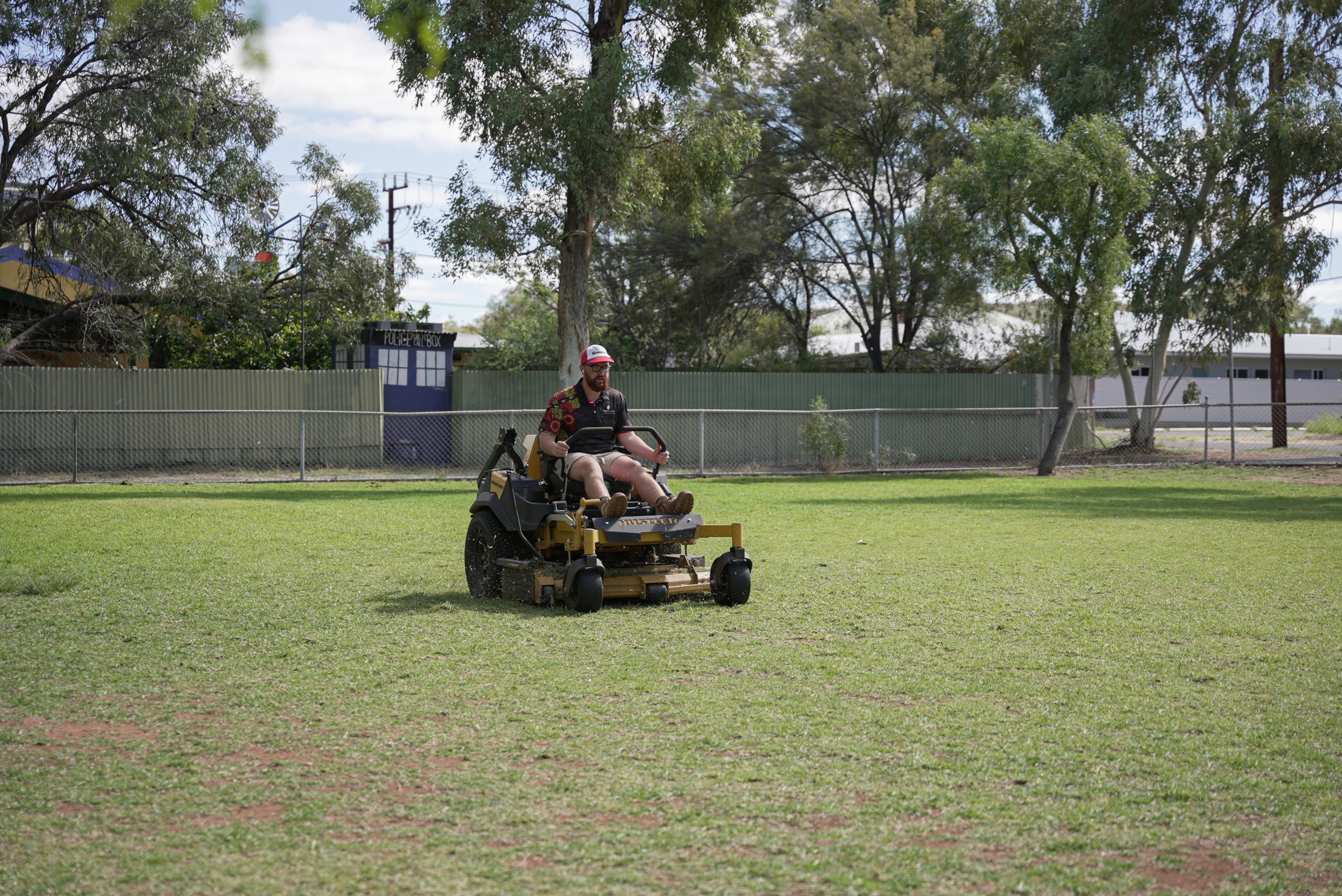
A garden does not need to be large to become difficult to manage. A narrow strip beside the house, a small backyard or a few garden beds near the driveway can all demand attention when weeds appear, grass grows unevenly or dry leaves collect in the corners.
In Alice Springs, outdoor upkeep also depends on the weather. Long dry periods can leave some plants struggling, while rain may encourage a sudden burst of growth. A garden that needed very little attention last month might require mowing, trimming and debris removal after a change in conditions.
Good yard maintenance is about knowing what needs doing and when. It does not mean watering every day, cutting everything short or spending an entire weekend trying to make the garden perfect. Often, a sensible routine and a few well-timed jobs are enough to keep an outdoor area useful and presentable.
This guide looks at how homeowners, landlords and property managers can organize garden work, deal with common problems and decide when professional assistance is worth considering.
What Does Yard Maintenance Actually Involve?
The tasks depend on the property. A home with an established lawn requires a different approach from a rental property with gravel paths, a few shrubs and a small patch of grass.
For one property, the main job may be mowing and trimming the edges. Another might need weeds removed from garden beds, loose branches collected, paths cleared and overgrown areas brought back under control.
Routine garden care can include:
- Mowing lawns when the grass needs cutting.
- Trimming edges around paths, driveways and garden borders.
- Removing unwanted weeds before they spread.
- Collecting fallen leaves, small branches and loose garden debris.
- Tidying garden beds and checking the condition of existing plants.
- Inspecting irrigation equipment for visible leaks or damage.
- Arranging green waste removal when the volume is too large for ordinary disposal.
Not every visit needs to cover every task. It is often more practical to identify the immediate priorities and deal with the remaining work over time.
For instance, if a property is being prepared for new tenants, clearing the entrance and cutting long grass may be the first priority. Detailed garden-bed work can follow once the main outdoor areas are accessible.
Why Alice Springs Properties Need a Local Approach
Gardening advice written for a cool, wet climate does not always translate well to Central Australia. Plants, lawns and soil respond differently when temperatures are high and rainfall is limited.
The Town of Alice Springs climate information is a useful starting point for understanding local conditions. Property owners should consider both hot summer days and cooler winter periods when deciding how much work their gardens need.
During hot weather, grass that has been cut too short may struggle to recover. Plants can also suffer when water is applied inconsistently or when their location exposes them to more heat than they can tolerate.
Dry weather creates another issue: outdoor debris can remain in place for weeks because it does not break down quickly under every condition. Leaves, brittle stems and small branches may collect behind sheds, along fences and around outdoor equipment.
A local maintenance plan should therefore consider the plants already growing on the property, the amount of available water and the time the owner can realistically devote to garden care.
How to Build a Manageable Maintenance Schedule
A useful schedule starts with observation rather than a fixed list of jobs. Walk around the property and identify which areas change quickly and which ones remain relatively tidy.
The front lawn might need frequent attention because it is visible from the street. A shaded section at the back may grow more slowly, while garden beds near an irrigation line could need regular weed checks.
Once you know where the work is concentrated, divide it into three groups:
Tasks to check frequently: Look for grass growing over paths, weeds appearing around borders, blocked access and visible irrigation leaks.
Tasks to complete periodically: Arrange mowing, edge trimming, garden-bed tidying and the collection of accumulated debris as needed.
Tasks to review seasonally: Assess plant health, mulch condition, irrigation settings and areas that repeatedly become difficult to manage.
This approach avoids treating every part of the yard as though it needs attention at the same time.
It also helps when arranging professional services. Instead of requesting a vague garden tidy, you can explain that the front lawn needs cutting, the side path requires clearing and the rear garden needs green waste collected. A clearer description makes it easier to estimate the job.
Lawn Care: When Cutting Is Necessary and When It Can Wait
Grass growth varies with the species, watering conditions, soil and weather. A lawn that grows quickly after rain may need attention sooner than a dry area that has barely changed over several weeks.
One common mistake is waiting until the grass is very long and then cutting it as short as possible. This can leave an uneven finish and stress the lawn, particularly during hot conditions. If the growth is excessive, reducing the height gradually may be the better option.
A yard cutting service can be useful when the lawn has become difficult to manage, when equipment is unavailable or when the property owner does not have time for regular mowing. Before booking, check whether edging, collecting clippings and clearing paths are included.
Grass is not the only thing to watch. Weeds may grow along fence lines, around pavers and in gaps near the driveway. These areas are easy to overlook during mowing but can make a garden look untidy soon afterwards.
The aim is not to cut grass as often as possible. It is to maintain a suitable height for the lawn and keep the surrounding outdoor areas under control.
A Task-by-Task Guide to Garden Care
Different parts of a property need different kinds of attention. The table below can help you plan a practical routine.
| Area of the property | Recommended task | When to check it | What to look for |
|---|---|---|---|
| Front lawn | Mow and trim edges | According to growth | Uneven grass and overgrown borders |
| Side paths | Clear weeds and debris | During routine inspections | Blocked access and loose material |
| Garden beds | Weed and tidy plants | As required | Unwanted growth and damaged foliage |
| Irrigation system | Inspect visible fittings | Periodically and after problems arise | Leaks, broken drippers and poor coverage |
| Fence lines | Remove suitable loose debris | During yard inspections | Accumulated leaves and branches |
| Driveway edges | Trim grass and clear weeds | As growth appears | Grass spreading onto hard surfaces |
| Backyard | Collect debris and organise the space | Regularly, depending on use | Hidden clutter and neglected corners |
| Green waste area | Arrange suitable collection | When waste accumulates | Overflowing piles and disposal needs |
The timing shown is a guide, not a rigid schedule. A property with little grass may need far less mowing than one with an irrigated lawn. Similarly, a garden with mature shrubs may need occasional pruning rather than frequent trimming.
Managing Weeds Without Creating More Work
Weeds often begin in places that receive little attention. They can appear along the edge of a driveway, between paving stones or in a garden bed where plants have left gaps in the soil.
Leaving them until they are widespread makes removal more time-consuming. Regular inspections allow small patches to be dealt with before they occupy a larger area.
The right method depends on the plant, its location and the surrounding vegetation. Hand removal may be suitable for a small patch, provided the roots can be removed safely. Other situations may require a suitable treatment applied according to its label and any relevant safety instructions.
Avoid spraying chemicals casually on windy days or near plants you want to keep. Also, do not assume every unfamiliar plant is harmless. Some weeds can irritate skin or have other risks, so use appropriate protection and seek identification when necessary.
Where weeds return repeatedly, look for the reason. Bare soil, unsuitable ground cover or irrigation that favours unwanted growth may be contributing to the problem.
Keeping Garden Waste Under Control
Garden work often creates more waste than expected. A short mowing session may produce a manageable amount of clippings, but a neglected yard can contain dry branches, dead plants, weeds and piles of accumulated leaves.
Leaving the material scattered around can undo much of the visual improvement. It may also make paths harder to use and leave corners looking unfinished.
Before a clean-up, decide how the waste will be handled. Small amounts may be suitable for an approved green waste bin, depending on local arrangements. Larger volumes may need a dedicated collection or a trip to an appropriate disposal facility.
Do not burn garden waste simply because it is dry, and check local requirements before disposing of plant material. Some waste may be unsuitable for ordinary green waste collection.
If a property has been neglected for months, mention the likely volume of waste when requesting a quote. Collecting a few bags of clippings is a very different job from removing a large pile of branches and overgrown vegetation.
Water-Wise Gardening in Central Australia
Water management is one of the most important parts of caring for an outdoor space in an arid region. A garden can be attractive without keeping every section of lawn green throughout the year.
The Town of Alice Springs water-saving advice provides useful guidance on using water thoughtfully and checking irrigation equipment.
Start by looking for obvious waste. A leaking connection, damaged pipe or sprinkler aimed at the driveway can use water without benefiting the plants. Check the equipment periodically and adjust the watering schedule when the weather changes.
Drip irrigation may be appropriate for some garden beds because it delivers water close to plant roots. However, the design needs to suit the plants and soil. Poorly positioned drippers can leave some areas dry while others receive too much water.
Mulch can help retain moisture around suitable plants and reduce temperature changes near the soil surface. Choose material that suits the garden, and avoid piling it against stems or tree trunks.
When replacing plants, consider species that are suited to local conditions. Plants that cope well with the climate may require less intervention than varieties that struggle with the heat or available water.
When Is It Worth Hiring a Professional?
Some outdoor tasks are straightforward enough to complete yourself. Others become difficult because of the size of the property, the condition of the garden or a lack of suitable equipment.
Professional help may be worthwhile if the grass has become too long for an ordinary mower, if the yard has not been maintained for a long period or if several tasks need to be completed before a property can be used again.
It can also be convenient for landlords and business owners who want to arrange recurring care rather than organize every visit individually.
Before engaging a provider, clarify the following:
- Which areas need attention and which can be left as they are.
- Whether the job includes mowing, edging, weeding or debris collection.
- Whether green waste removal is included in the price.
- Whether restricted access or uneven ground could affect the work.
- Whether the first visit is a major clean-up or part of an ongoing schedule.
Tree work, hazardous waste and significant irrigation repairs may require separate specialists. Confirm the provider’s capabilities rather than assuming all outdoor jobs fall under one service.
For properties that need a more extensive tidy-up, review the yard clean-up service details and compare them with the work required.
What Influences the Cost of Yard Maintenance?
There is no single price that applies to every garden. A small, regularly maintained yard may need little more than a short visit, while a large property with overgrown grass and substantial debris can require considerably more labour.
| Pricing consideration | Why it affects the job | How to prepare |
|---|---|---|
| Property size | Larger areas generally take longer | Share approximate dimensions |
| Current condition | Overgrowth and accumulated debris add work | Describe what has been left unattended |
| Access | Narrow gates and obstacles can slow progress | Explain any access restrictions |
| Waste removal | Collection and disposal may be additional | Estimate the amount of waste |
| Requested tasks | Extra gardening work increases the scope | List each required service |
| Ongoing visits | A maintenance plan differs from a one-off clean-up | Explain your preferred frequency |
When comparing quotes, check that the included work is similar. A low price may cover mowing only, while a higher estimate may include edging and waste removal.
Photographs can help communicate the current condition of the garden if the provider accepts them. Be honest about the amount of work needed; a realistic description is more useful than a low estimate that has to be revised after arrival.
Common Problems That Make Outdoor Care Harder
One problem is trying to fix everything in a single visit. If the garden has been neglected for months, attempting to mow, weed, prune, repair irrigation and remove all waste at once may be impractical. Prioritizing access and the most urgent work can produce a better result.
Another issue is following a schedule without checking the actual conditions. Mowing a slow-growing lawn simply because it is a particular day of the month can waste effort. Conversely, leaving a fast-growing area unattended after rain may create a bigger job later.
It is also easy to overlook the small spaces around the property. The area beside an air-conditioning unit, behind a shed or along a fence may not be visible from the front entrance, but debris and weeds can collect there.
Finally, do not ignore repeated problems. If one patch constantly becomes overgrown or an irrigation fitting keeps leaking, investigate the cause instead of repeatedly treating the symptoms.
Conclusion: A Practical Routine Makes All the Difference
Looking after a yard is easier when the work is broken into manageable tasks. Regular inspections, timely grass cutting, sensible weed control and proper waste disposal can prevent an ordinary garden from becoming a major clean-up.
For Alice Springs properties, the most effective routine also takes account of local weather and water availability. Some weeks may require little more than a quick check, while periods of active growth can call for extra attention.
If your outdoor space needs a fresh start or you want help keeping it presentable, Totally Tidy can be contacted to discuss the work involved. Visit the yard clean-up service page or request a quote online to explain your property’s needs.
Start with the areas that matter most, establish a realistic schedule and review it as conditions change. A little planning can make outdoor upkeep more predictable and leave you with a yard that is easier to use.
Frequently Asked Questions
1. What does yard maintenance usually include?
It may include mowing, edging, weed removal, garden-bed tidying and collecting loose garden debris. Some providers also offer green waste removal or arrange additional services. The exact scope should be confirmed before the job begins.
2. How often should a yard be maintained in Alice Springs?
It depends on grass growth, rainfall, irrigation and the plants on the property. Inspect the yard regularly and arrange work when the grass, weeds or debris need attention. Growth may change considerably between dry periods and after rainfall.
3. Is yard maintenance different from a yard clean-up?
Yes. Routine maintenance keeps an outdoor area manageable over time. A clean-up usually addresses an existing build-up of overgrown grass, weeds or garden waste. A neglected property may need an initial clean-up before regular visits become practical.
4. How can I make my garden easier to maintain?
Choose plants suited to local conditions, inspect irrigation equipment, control weeds early and keep garden waste from accumulating. Grouping plants with similar watering needs and using appropriate mulch can also simplify ongoing care.
5. Should I arrange professional yard maintenance for a rental property?
It can be useful when you need predictable outdoor upkeep or do not live near the property. Agree on the required tasks, visit frequency and waste arrangements in advance. Check the tenancy agreement and applicable responsibilities before deciding who should arrange or pay for the work.